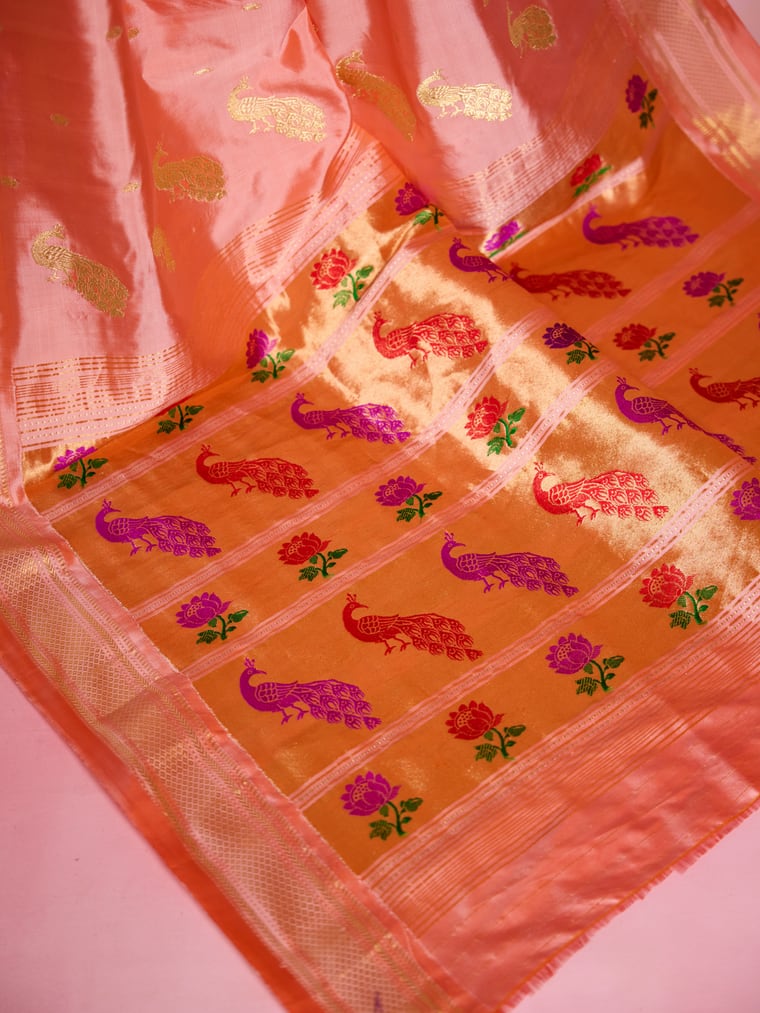
It came off a hand-operated loom
A powerloom runs the same design off in under an hour and sells it under the same name. In a photograph the two look alike. As objects they are not: a handloom saree is woven at roughly a hand-span a day, and every piece here came off one.
Turn it over and look at the back
On a powerloom copy the threads run right across the reverse, carried from one motif to the next and then cut away. On a true interlocked-weft pallu nothing is carried, so there is nothing to cut — the back is as finished as the front. Ask any seller to turn the saree over. A real one has nothing to hide.
Paithani is a protected name
Paithani holds a Geographical Indication, which protects the name — not everything sold under it. The cloth on a station platform at a fraction of the price is not covered by it. Ask for the mark, and ask for the name of the weaver.
Nobody stands between the loom and you
Every saree here was bought at the loom or in the cluster, from the people who wove it, rather than out of a wholesaler’s warehouse. It is why the price is what it is, and why the weaver can be named.